
The Divine Story Behind Pichwai Paintings: A Living Heritage of Indian Art

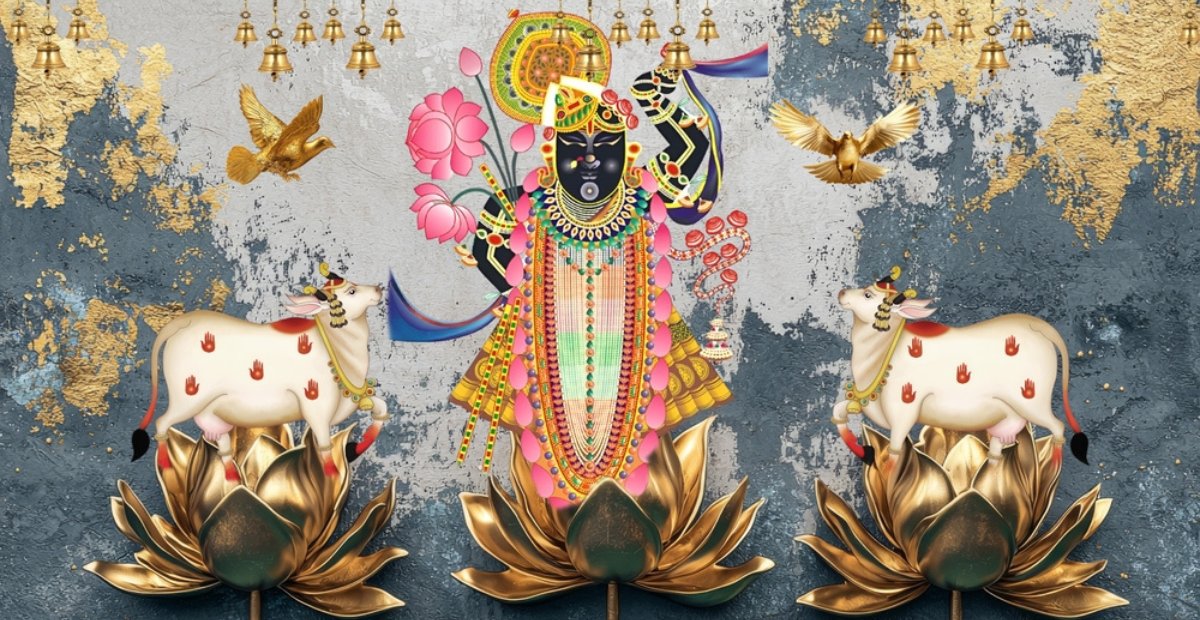
At first glance, a Pichwai can feel like a dream pulled onto cloth: Krishna, cows, lotuses, and temple lamps holding the eye for longer than expected. These works began as large textiles hung behind the deity in Nathdwara, turning each ritual into a moving picture for devotees. As merchants, pilgrims, and families travelled, they carried this visual language into new cities, and slowly it stepped out of temple walls and into ordinary homes.
Today, collectors, designers, and spiritual seekers look to pichwai paintings India not only for worship, but also for calm, colour, and continuity in busy urban rooms. Sitting between devotion and design, this branch of traditional Indian art has become a way to keep faith visible without feeling heavy or overly formal. For many homes, it is less an object of display and more a quiet, dependable presence.
Origins in Nathdwara
The story of Pichwai starts at Nathdwara, where painters and priests co-existed to celebrate Shrinathji. Instead of just sewing small icons together, they made big cloth backdrops that could be swapped in and out for different hours of the day, or the monsoon season, or whatever festival was going on.
Over the centuries, this series of images created a visual calendar that allowed worshippers to recall stories even when no one was reading aloud from scriptures. In spirit, these early works were handmade religious paintings, but they also had a practical purpose: to assist the crowd in finding its focus; to frame the deity with beauty; and even, by repeating geometric features like a rhythm or melody line, to help give rhythm and melody to temple life.
From Shrine to Home
As travel routes expanded, people who felt deeply moved by these textiles wished to take a fragment of that experience home. A family might visit Nathdwara for a wedding, commission a smaller Pichwai featuring a scene they loved, and carry it back carefully to a faraway city.
Once installed, the painting would often be hung behind a household shrine, or brought out only on particular festive days. Over generations, handmade religious paintings like these appeared in townhouses, ancestral homes, and compact urban apartments, acting as silent links to a pilgrimage town that many family members had never actually seen, but still felt connected to.
Layers of Devotional Craft
Behind a finished Pichwai lies a slow, layered process. The fabric is prepared with starch and stretched so it will not sag. Artists then sketch a light grid and draw the main figure, followed by gopis, cows, trees, and arches that hold the scene together. Colours are added in careful stages; flat areas come first, then shading, patterns, and extremely fine line work. To someone watching in the studio, the making of Krishna Pichwai wall art looks less like quick decoration and more like a quiet ritual of its own.
Typical stages often include:
- Preparing and stretching the chosen fabric base
- Sketching the central figure and overall composition
- Building up flat colours before textiles and jewellery details
- Finishing borders, highlights, and a final protective layer
Stories in Every Motif
Every form on the cloth carries a mood or story, even when it is not formally explained. Krishna lifting Govardhan, cows gathered under trees, Radha and the gopis carrying lamps, or musicians framed in arches all point to particular festival moments and seasons. Children may first be drawn to playful calves or bright flowers and only later learn the meaning behind them. Seen this way, Krishna Pichwai wall art becomes an ongoing dialogue between image and viewer, passing on episodes of faith gently rather than through formal instruction.
Common motifs that frequently appear are:
- A central deity framed by temple-style architecture
- Rows of cows symbolising gentleness and abundance
- Lotus ponds, flowering creepers, and trees suggesting shelter and grace
Pichwai in Modern Interiors
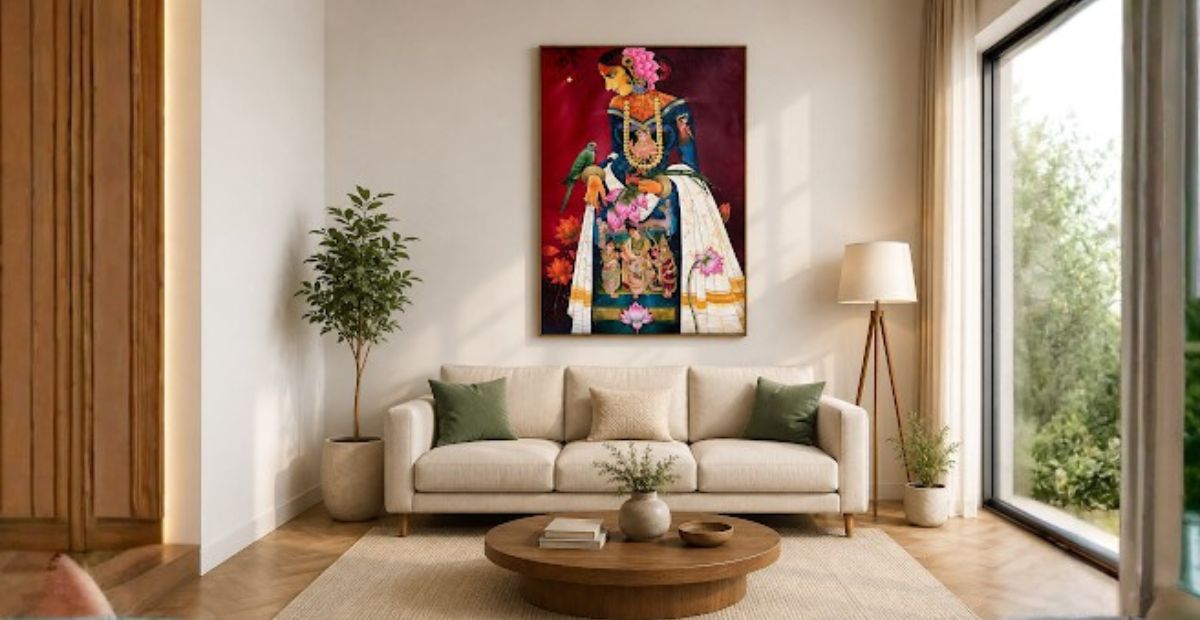
In today’s homes, a Pichwai can sit comfortably beside minimal furniture, clean walls, and contemporary lighting. Designers familiar with traditional Indian art know that such detailed work does not need bright surroundings; it needs space to breathe. A young couple in Bengaluru placed a soft-toned panel above a low console in their living room, transforming it into a calm gathering corner without changing any furniture. A boutique hotel near Udaipur lined a corridor with narrow panels so guests discovered local stories while simply walking to their rooms, instead of only in a formal display area.
Some settings where these textiles feel especially natural include:
- Behind a home altar or meditation corner
- On a main living or dining room wall
- In hotel lobbies, villas, or heritage stays
- In quiet office spaces such as reception or meeting rooms
Selecting and Caring Wisely
Choosing the right piece usually starts with taking time. Many buyers prefer to sit with several options, noticing which scene they keep returning to after stepping away. The emotional tone of the image, its size, and its colours all matter when the work is meant to live with a family for decades.
People who hope to buy authentic Pichwai paintings online often ask about the base fabric, the kind of pigments used, and whether the work is fully hand-painted or partly printed.
Once a painting reaches its new home, small habits keep it safe. Well-framed pichwai paintings India are best kept away from harsh sunlight, damp corners, and strong heat sources. Gentle care can look like:
- Dusting the surface occasionally with a soft, dry cloth
- Allowing a little airflow behind large works where possible
- Using professional framing with protective glass or acrylic
A Living Legacy Today
For many people, the first encounter with Pichwai is simple visual pleasure, and only later does its depth become clear. A painting that begins as a striking backdrop in the living room slowly collects memories of festivals, visiting relatives, and quiet early mornings. Children start to recognise familiar cows or lotuses, and guests often lower their voices without knowing exactly why. Over time, a single textile can soften a room, shape family rituals, and keep a thread of devotion present even when everyday life feels crowded and fast.
As a studio, we see that moment of recognition as the true beginning of a relationship. When people choose to buy authentic Pichwai paintings online, we guide them like a host leading someone through a temple, pausing at the right corners and stories. At Kalashree Art, we take care that each recommendation feels like a promise: that the painting will belong in their space, carrying the calm, colour, and quiet divinity they were searching for long after the first viewing.
Frequently Asked Questions
1) What separates Pichwai from other devotional arts?
Pichwai evolved as a visual expression of large narrative cloth upon which a particular image of Krishna would hang, rather than paint it as picture frame portrait art. Its large size, intricate narrative detail and clear association with one temple tradition make it a distinctive example amongst the many such paintings.
2) Where can a Pichwaibe hung in a modern home or office?
These pieces are a fit for places where people naturally pause: behind a home altar, on the wall of a main living room, in a reading corner or in a tranquil reception area. The detail of the painting, as well as its overall mood, stands out with good lighting, a little distance and a clean surrounding wall.
3) Is it challenging to preserve a Pichwai for years?
With good care, a well-made piece is more indestructible than its delicate appearance suggests. Small gestures, such as not displaying it in direct sunlight or around moisture, placing it in high-quality framing and occasionally dusting gently, are all that is needed for the colours and fabric to stay stable for decades.
Related Posts
KEY POINTS: Online buying becomes easier when the purpose of the artwork is clear A
KEY POINTS: Affordable art can still make a home feel thoughtful and complete A painting
KEY POINTS: Handmade artwork can give a plain room a clearer sense of identity A
A living room can lose its sense of calm when every wall, surface, and corner
An Online Art Gallery experience feels truly satisfying when it helps you do three things
Handmade Painting of Lord Krishna as a Gift of Blessings and Beauty A meaningful gift